Visa Regulations, Agricultural Employment, and Productivity
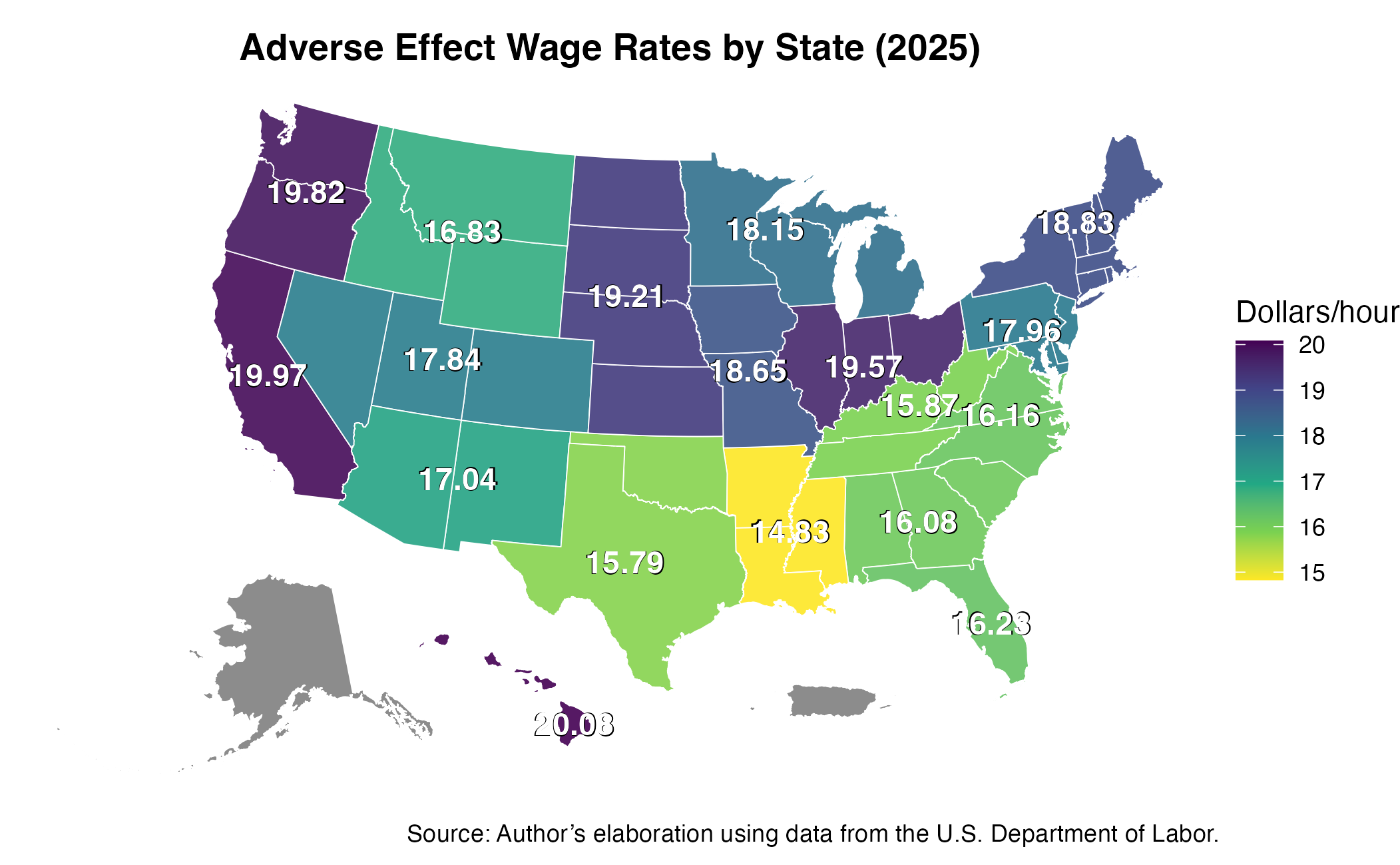
The H-2A visa program provides US farms access to foreign seasonal labor but requires employers to pay a federally mandated minimum hourly wage, the Adverse Effect Wage Rate, to both foreign and domestic workers performing comparable tasks. This paper studies how increases in the H-2A visa wage affect farms’ allocation of agricultural inputs. Using county-level data from the 2002–2022 USDA Census of Agriculture and a border-county pair design that compares counties across state lines, I show that higher visa wages lead farms to substitute away from labor and toward capital and materials. I find that a 1% increase in the visa wage on average leads to a 1.2% increase in machinery values, increases intermediate input use by 3.9% on the intensive margin, and expands the range of inputs used by 1.1% on the extensive margin. I find no effect on employment or payrolls. The results are consistent with labor-cost-driven mechanization and input intensification, which together contribute to higher agricultural productivity.